Pottery Basics
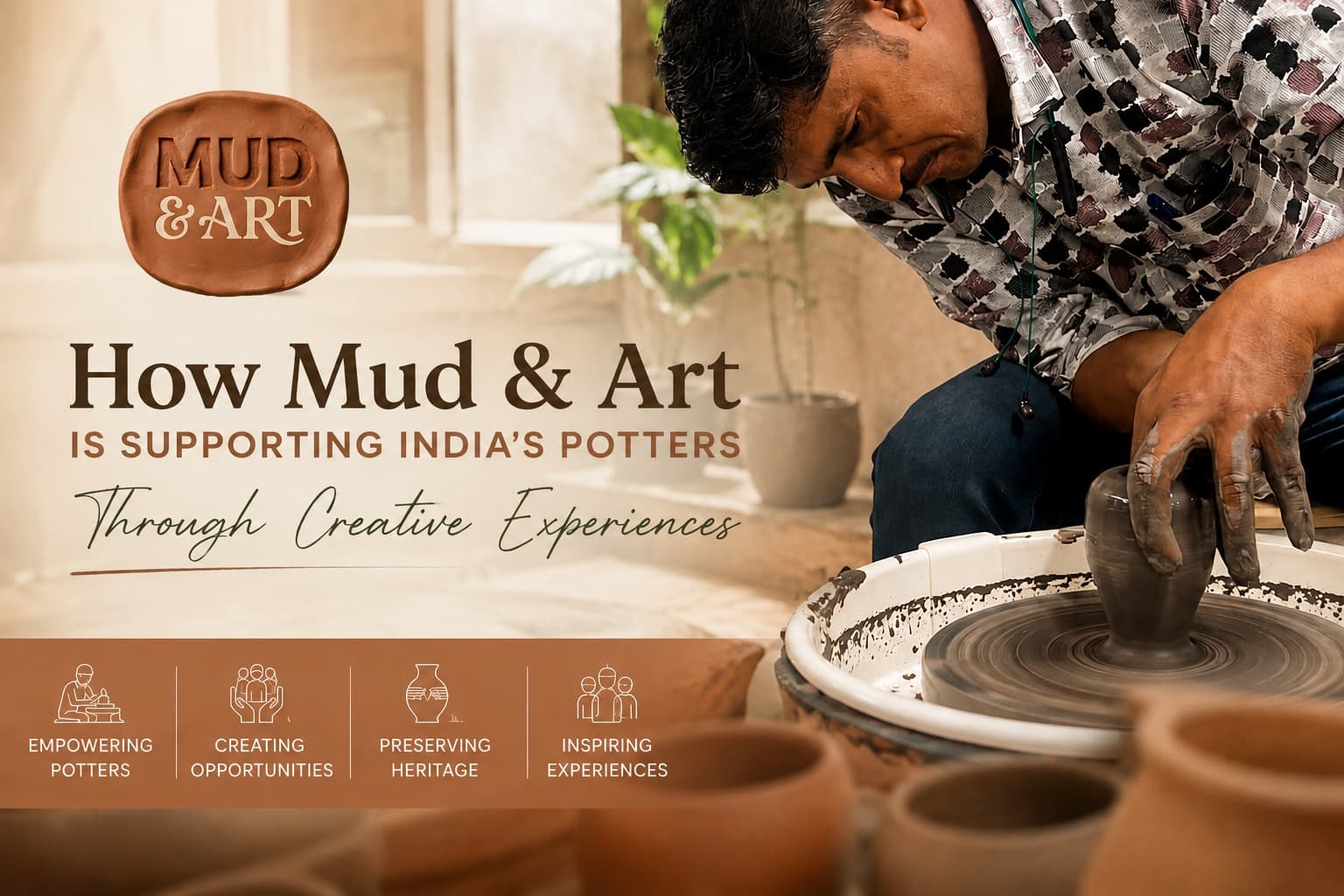
How Mud & Art Is Supporting India’s Potters Through Creative Experiences
Mud & Art brings people closer to India’s pottery traditions through hands-on creative experiences. By creating opportunities for skilled potters to teach, guide, and share their craft, each workshop helps preserve heritage, support livelihoods, and inspire a deeper appreciation for handmade art.
- Written by
- Mud & Art
- Published
- 31 July 2026
- Reading time
- 10 min read
There is a moment in every pottery workshop when the room becomes noticeably quieter.
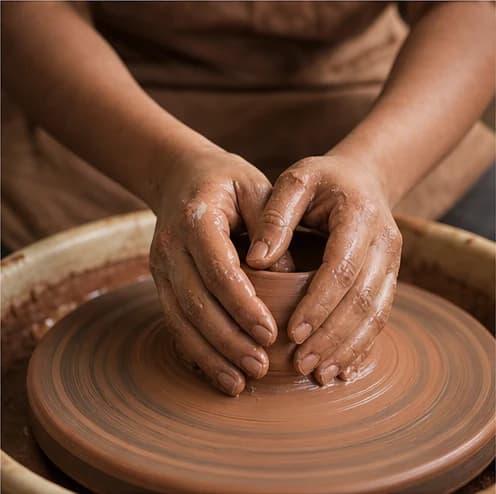
The clay has been placed on the table. Sleeves have been folded. Phones have been set aside. Hands that felt unsure only a few minutes ago are now pressing, shaping, smoothing and beginning to understand the material.
Standing nearby is a potter who has performed these movements countless times.
They know when the clay needs more water, when it needs firmer hands and when it simply needs patience. Their knowledge does not come only from books or formal lessons. It has been developed through years of observation, repetition and experience and, in many cases, passed from one generation to the next.
At Mud & Art, our workshops are not only about helping people make something from clay. They are also about bringing people closer to the skilled hands, stories and traditions behind the craft.
Creating Opportunities Beyond the Traditional Marketplace
For many people, their interaction with pottery begins and ends with purchasing a finished product.
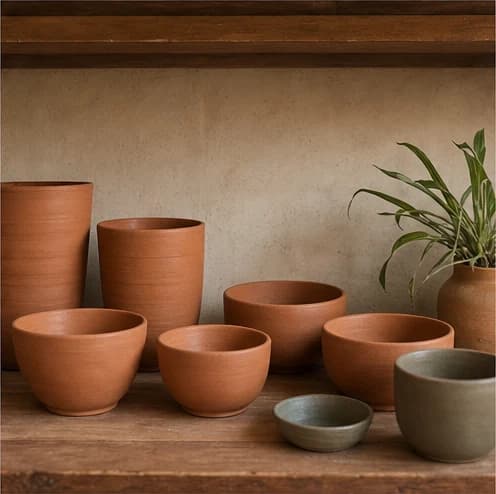
They may pick up a terracotta cup, planter, diya or decorative piece without meeting the person who made it. The skill behind the object often remains invisible.
A workshop changes that relationship.Participants do not simply see the finished result. They experience the process. They discover how difficult it can be to center clay on a wheel, maintain even pressure or create a balanced form. A bowl that once looked simple suddenly represents concentration, control and years of practice.
This creates a different kind of appreciation one that cannot always be developed by looking at pottery on a shelf.
Through workshops, community events, corporate sessions, cafe collaborations and private gatherings, Mud & Art brings potters into spaces where their knowledge becomes the center of the experience. The potter is not hidden behind the product. They are present as a teacher, guide and craftsperson. Mud & Art currently describes a community of more than 100 potters connected with its work.
Each experience creates room for interaction. Participants can ask questions, observe techniques closely and understand the care behind every handmade form.
At Mud & Art, workshops are not only about helping people make something from clay — they are about bringing people closer to the skilled hands, stories and living traditions behind the craft.
Giving Potters the Space to Be Teachers
One of the most powerful parts of a pottery workshop is watching a potter teach.
A nervous beginner may struggle to control the wheel. The clay leans to one side, collapses or refuses to become the bowl they imagined. The potter steps in not necessarily to create the object for them, but to show them how to listen to the material.
“Slow down.”
“Keep your hands steady.”
“Do not fight the clay.”
These instructions may sound simple, but they contain years of understanding.
At Mud & Art, the learning environment is designed to be beginner-friendly. Participants receive demonstrations, personal attention and guidance throughout the making process. The intention is not to rush towards a perfect result, but to allow each person to learn at a comfortable pace.
This approach also gives potters the recognition they deserve as educators and keepers of knowledge not only as producers of objects.
Connecting New Audiences with Clay
Pottery becomes more meaningful when it reaches people who may never have
considered trying it.
A child discovering that a lump of clay can become an animal, cup or tiny house experiences a new kind of confidence. Colleagues sitting around a shared table begin talking without titles or workplace hierarchies. Friends laugh over uneven bowls. Adults who spend most of their week moving between screens finally spend an afternoon making something with their hands.
Mud & Art designs clay experiences for teams, communities, brands, families and private groups. The workshops encourage people to slow down, create with intention and connect through the process of making.
For participants, this can be a creative break.
For potters, it creates an opportunity to take their craft into workplaces, cafés, events, communities and other contemporary spaces.
For the tradition itself, it means reaching a wider and often younger audience.
The object becomes more than something handmade; it becomes a lasting memory of concentration, laughter, and human connection.
Every Handmade Piece Carries a Story
Not every workshop creation will be perfectly round.
Some cups will have uneven rims. Some bowls will lean slightly. A handle may be thicker than planned. Fingerprints may remain visible on the surface.
Yet these are often the pieces people value most.
They remember the concentration it took to shape them, the laughter when the clay collapsed and the quiet guidance of the potter who helped them begin again. The object becomes more than something handmade; it becomes a memory of the experience.
This is the kind of relationship with pottery that Mud & Art hopes to create.
We want people to see clay not merely as a material, but as a meeting point between tradition and new ideas, skilled potters and curious beginners, patient hands and playful minds.
Shaping a Future Together
Supporting India’s potters is not only about celebrating the past. It is also about creating a future in which their knowledge continues to be valued, shared and experienced.
Every workshop can contribute to that future.
Every participant who learns directly from a potter gains a deeper understanding of the craft. Every organization that chooses a clay experience creates another space for traditional skills to be seen. Every child who touches clay for the first time becomes part of a story that began many generations before them.
Mud & Art is built around the potters who carry knowledge in their hands, the partners who open their spaces and the participants who arrive ready to try something new.
Together, they transform a simple piece of clay into something much larger: an opportunity, a conversation, a memory and a living connection to India’s pottery heritage.
Come with curious hands. Leave with a creation and a deeper appreciation for the hands that have kept this craft alive.
Reading about it is one thing.
We bring the wheels, the clay and the potters to your venue across Pune.